
Your marble dining table has arrived, the chairs are in place, and somehow the room still feels unfinished. You add a vase. Then a bowl. Then something borrowed from the bookshelf. Five minutes later, the table looks like a shop display having an identity crisis. Sound familiar? Styling marble is less about filling space and more about giving its natural pattern room to speak. With a few thoughtful choices, you can create a dining setup that feels inviting, useful, and distinctly yours. These seven ideas will help you move beyond the empty surface without burying the reason you chose marble.
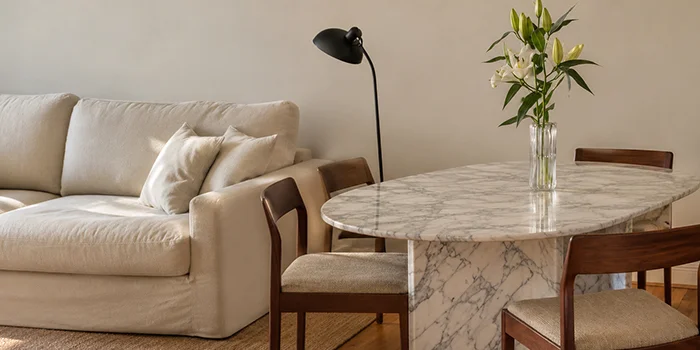
A marble surface already brings movement through its veins and color changes. Start with one object that gives the eye somewhere to settle, such as a sculptural vase, a wide ceramic bowl, or a low arrangement of branches.
The aim is presence, not size for its own sake. A tall vase might look striking in an empty room but interrupt conversation once everyone sits down. Try your arrangement from a seated position before deciding it belongs there.
For a modern marble dining table centerpiece, choose a shape that contrasts with the stone. Rounded pottery can soften a rectangular table, while an angular vessel adds definition to a circular design.
Keep the surrounding space open. If your centerpiece needs multiple supporting objects to feel convincing, try changing the centerpiece itself. One deliberate choice often feels more considered than a collection assembled simply because the table looked bare.
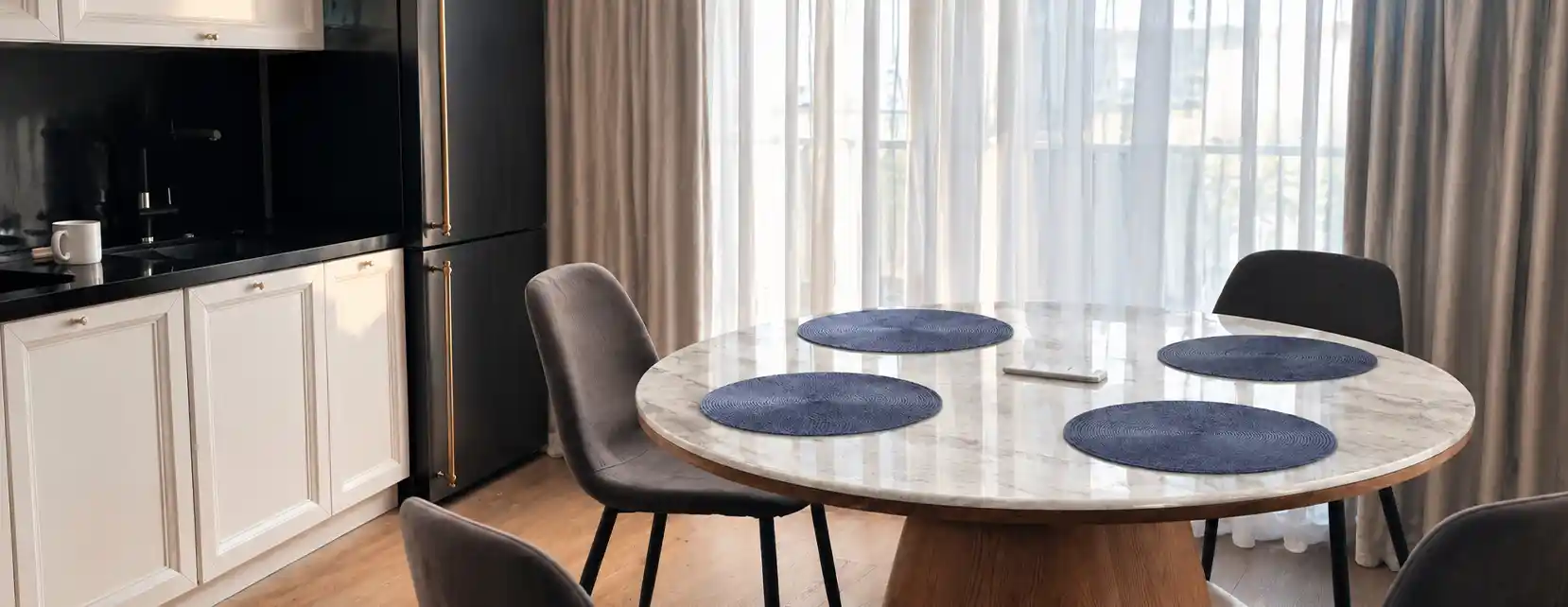
Smooth stone pairs beautifully with materials that have visible texture. Think woven place-mats, softly creased napkins, or a narrow fabric runner. These details make the dining setting feel approachable while allowing the marble to remain part of the picture.
Start with one textile element. If you choose a runner, leave strips of stone visible on either side. If place-mats supply the texture, you may not need a runner at all.
When exploring marble dining table styling ideas, pay attention to the underside of each accessory. Choose clean, smooth backing suitable for the surface, and follow the table supplier's guidance about mats and protective layers.
Try a relaxed fabric against a sharply shaped base, or a tightly woven mat beside curved chairs. The contrast creates interest without relying on extra ornaments. Your table should still feel ready for dinner, rather than dressed for an event nobody has been invited to.
Look closely at your marble before choosing decorative colors. Does it contain smoky grain lines, warm beige patches, brown movement, or a cooler white background? Those details can suggest a palette that feels connected to the table.
Pick one quiet base color and one accent. For example, cream napkins and muted green pottery can bring warmth to pale stone. Darker marble might suit soft gray ceramics with a small touch of rust.
You don’t need to match every vein. Repeating one undertone across two or three objects is enough to create a relationship.
For white marble dining table decor, avoid assuming everything must be white. A little contrast helps separate plates, flowers, and vessels from the surface beneath them.
Before buying a full set, place one sample beside the table in daylight and again during dinner lighting. Colors can feel different as the room changes, and your setup should work when you actually use it.
A completely flat arrangement can feel unfinished, but a forest of tall objects creates another problem. Nobody wants to lean sideways through dinner just to see the person across the table.
Build a gentle variation in height. Pair a low bowl with a taller vase, then use a folded napkins or a small dish as the lower layer. The difference can be subtle.
For round marble dining table decor, keep the grouping near the center and look at it from every seat. A circular table has no obvious back, so an arrangement should feel balanced from several angles.
On a longer table, repeat low objects along the center instead of piling everything into one tall cluster. Leave room for shared plates and serving utensils.
If you love dramatic branches, enjoy them between meals and move them before guests sit down. Styling can change with the moment. It does not need to perform every function at once.
Greenery adds a softer outline to a room filled with stone, glass, and straight furniture edges. A few stems can be enough, especially when the table already has expressive veining.
Choose the silhouette before choosing the quantity. Upright stems create a different mood from loose branches that spread outward. Consider how far they reach and whether they interfere with chairs, lighting, or nearby walkways.
For minimalist marble dining table decor, use a single vessel and limit the arrangement to one kind of foliage. That repetition keeps the setting calm without making it feel empty.
Use a watertight container with suitable surface protection beneath it, and wipe away moisture after arranging stems. Keep loose soil and dripping plant pots away from the dining surface.
If fresh greenery does not suit your routine, try a sculptural wooden object or an empty ceramic vase instead. The point is an organic shape, not another household task waiting to happen.
Decor does not have to sit in the middle of the table. Plates, napkins, and glasses can create the whole mood, particularly in a smaller dining area where a centerpiece takes up useful space.
Choose everyday pieces you enjoy seeing together. A simple plate, a textured napkin, and a glass with a clean outline can feel intentional without requiring matching accessories from the same range.
When planning a marble dining table setting, repeat one detail around the table. That could be a napkin color, a rounded plate shape, or a small woven mat beneath each setting.
Keep the arrangement easy to reset. Elaborate folds and multiple decorative layers may look appealing in photographs, but daily meals need room for food.
Store your used pieces nearby so setting the table becomes a short, pleasant habit. A dining room feels more welcoming when its beautiful objects have a purpose beyond waiting for company.
Your dining table might host breakfast, a laptop, an afternoon project, and dinner within the same day. A successful arrangement makes those changes easy instead of turning every activity into a clearing exercise.
Group smaller decorative objects on a suitably backed tray that can be lifted away. Keep the collection light enough to move comfortably, and avoid dragging it across the stone.
For small marble dining table decor, choose one compact grouping rather than spreading objects into every available gap. Empty space is useful space, especially when meals involve shared dishes.
Create two versions of your arrangement: a simple everyday setup and a slightly fuller version for gatherings. You might add fabric napkins, extra candles in suitable holders, or a second low vessel when guests arrive.
This approach lets your room feel finished without making it rigid. The table remains a working part of your home, and its styling changes around the way you live.
Before adding another accessory, step back and look beyond the table. Chair shapes, nearby artwork, curtains, and lighting all contribute to the scene. If each element demands attention, even a small centerpiece can feel excessive.
Repeat a color from the room or echo a curved shape already present. Then remove anything that makes the arrangement feel crowded. Photographing the space from the doorway can help you notice clutter that disappears when you stand beside it.
When browsing dining table accessories for marble tables, buy for a specific role. Decide whether you need texture, color, height, or a practical serving piece before adding anything to your basket.
Start with one idea from this list and live with it through several meals. Adjust what gets in the way, keep what makes the room feel inviting, and let the marble remain visible. A table that welcomes everyday use will always tell a warmer story than one nobody feels comfortable touching.
