
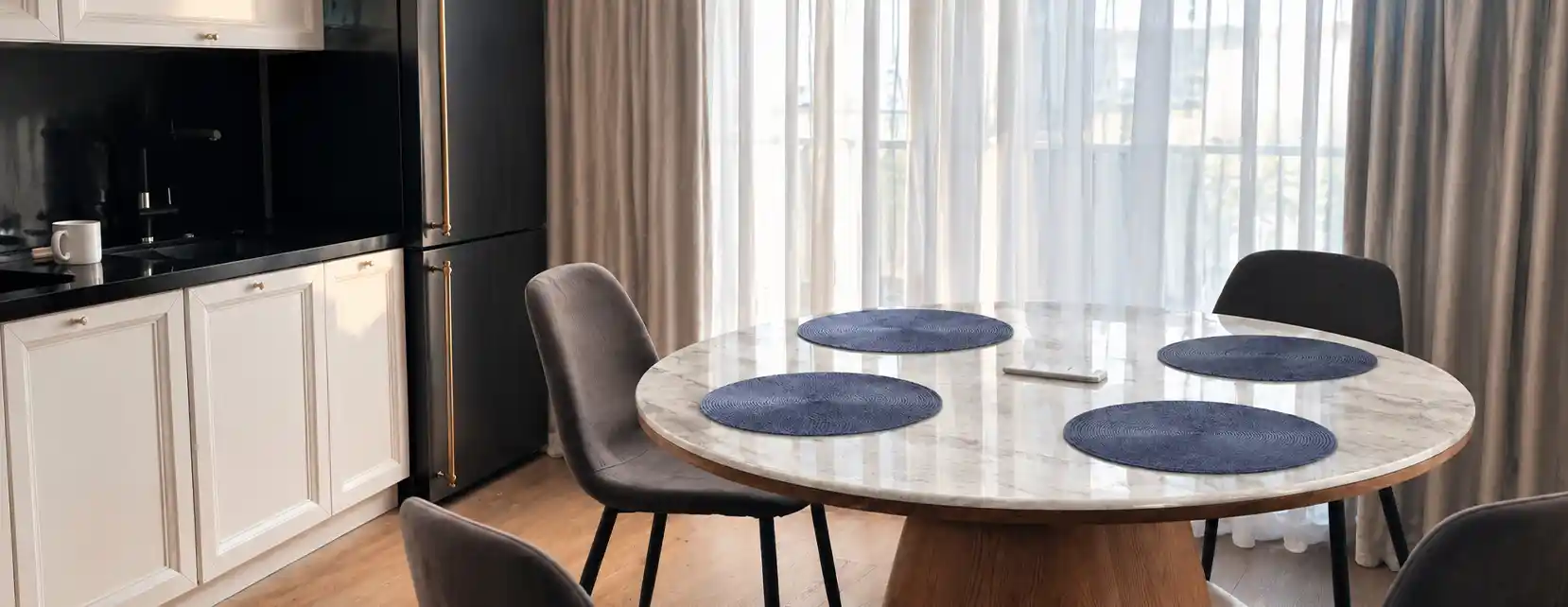
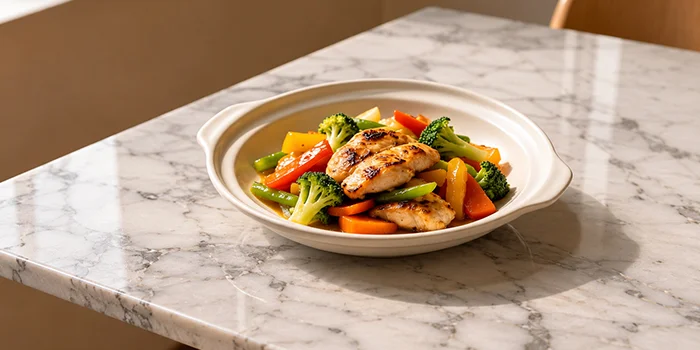
Dinner arrives with a sizzling pan, a hungry audience, and one questionable decision: placing that pan directly on your marble dining table. Nothing happens immediately, so you breathe out. Then you tend to notice a dull patch, or wonder whether that faint line was always there. Marble brings striking patterns and presence to a dining room, but its relationship with heat deserves more than a casual guess. Before your next gathering becomes a furniture regret story, understand what this stone can handle, what puts it under strain, and how a few simple habits can keep your table ready for many shared meals.
The answer to are marble dining tables heat resistant is yes, with limits. Natural marble can withstand some heat, but that doesn’t make direct contact with hot cookware a sensible serving habit.
Think of heat resistance as one useful characteristic, rather than permission to skip a barrier. When browsing marble dining tables for sale, look beyond attractive photographs and ask for written guidance on hot dishes.
That small step turns a vague sales phrase into something you can use at dinner.
The issue is not simply whether marble will burn. Sudden temperature changes can create stress within the stone, a process known as thermal shock.
Place a very hot pan on a cooler surface, and the contact area warms faster than the surrounding stone. That uneven change can cause cracking. Damage is possible, although one accidental contact doesn’t mean a crack will eventually appear.
This explains why a friend’s story about years of placing pans on marble tells you little about your own table. Different slabs, construction methods, and serving conditions can produce different outcomes.
For marble dining table heat protection, the practical response is quite straightforward; keep hot cookware off the bare stone and use a suitable trivet every time.
You may see a single temperature presented as a marble’s safe limit. For a finished dining table, that number can leave important questions unanswered.
Does it describe the stone alone or the complete piece? Was the heat brief or sustained? Does the table include surface coatings, filled areas, adhesives, or backing materials with their own limitations?
Without those details, a temperature claim offers little help when you are holding a casserole dish beside your guests.
Ask the seller what their instructions say about direct contact, serving dishes, and protective accessories. If they cannot explain the conditions behind a heat claim, avoid using that claim as your household rule.
A clear instruction to use trivets is more useful than an impressive number without context.
Not every table with marble pattern is made from the same material. Natural marble, marble veneer, stone composites, and printed marble effects can look similar in online photographs.
A natural marble dining table should have a description that identifies the material clearly. If you want solid stone, ask whether the dining surface is a solid slab or a layer attached to another material.
For a marble effect dining table, request the actual surface composition. Instructions for natural stone should not automatically be applied to resin, laminate, ceramic, or another material.
Ask about any coating and whether the seller provides separate cleaning and heat instructions.
Knowing the construction helps you compare marble dining table prices on a meaningful basis. Similar patterns do not necessarily mean similar materials, thickness, or every day requirements.
A table runner adds atmosphere, but appearance alone doesn’t make it suitable for hot dishes. The same applies to thin place-mats and decorative coasters.
Choose heat resistant trivets for marble dining tables according to the accessory manufacturer’s temperature and usage instructions. The trivet should support the full base of the dish without wobbling or letting hot edges touch the stone.
Look for a design with a base that will not scratch the finish. Keep its underside clean, since trapped grit can escape the surface when an accessory moves.
Do not assume that stacking random fabric layers creates enough insulation. Use an accessory intended for the heat involved.
Before serving, Place trivets where dishes will land. It is much easier to arrange protection before someone approaches with both hands occupied.
A mark discovered after dinner is not automatically heat damage. Marble can also develop stains and etching, which have different causes.
An oily spill can leave a stain when it penetrates the stone. Acidic ingredients, including lemon juice and vinegar, can react with marble and leave a dull area called an etch. A hot serving dish might arrive alongside either type of spill.
Sealing may improve resistance to staining, depending on the product and stone, but it doesn’t stop acid etching. It also should not be interpreted as permission to place hot pans directly on the surface.
When comparing sealed marble dining tables, ask whether the sealer does and what it does not do. Clear answers make daily ownership easier to understand.
A dining room should invite people to settle in, pass dishes, and enjoy themselves. Protection works better when it fits that rhythm.
Build your table setting around a few simple habits:
If you enjoy shared meals with several dishes, consider how much usable space remains after adding plates, glasses, and trivets.
A six seater marble dining table needs to suit your serving style as well as your chair count. An overcrowded arrangement makes accidental contact easier.
If someone puts a hot pan directly on the table, remove it safely and allow the area to return to room temperature naturally. Do not press ice against the spot or pour cold water over it.
Once the surface has cooled, look at the area under ordinary light. Photograph any visible change and note what touched the table and for roughly how long.
Avoid experimenting with abrasive powders, acidic cleaners, or aggressive polishing. A dull patch, a stain, and a crack need different responses.
Contact the seller or a stone restoration specialist for an assessment before attempting repairs. Share the material details and photographs so the next step reflects the actual issue.
One mishap calls for a measured response, not a cupboard full of improvised cleaning mixtures.
A useful product inquiry can be brief: What is the surface made from? Which barriers should I use beneath hot dishes? Are there coatings with separate instructions? Can I read the maintenance guide before ordering?
Notice whether the answers address the specific model you want. General statements about stone are less helpful than instructions tied to the table.
Keep those replies with your order details. You will have a practical reference when choosing accessories, setting up the dining room, or explaining the serving routine to others in your household.
Before you buy a marble dining table online, picture an ordinary evening in your home. Do you serve everything in the kitchen, or carry several hot dishes to the table? Will protective accessories stay within reach?
Request material details, dimensions, maintenance instructions, and delivery information. Read the return conditions and any exclusions relating to heat damage before ordering.
Then compare designs with those practical answers beside you. The right purchase should make sense beyond the product photograph.
Marble offers visual character, but enjoyable ownership depends on realistic expectations. Choose a table whose requirements fit your routines, add suitable trivets to your shopping list, and plan your serving space. Your next dinner can revolve around conversation and good food, with the stone providing the backdrop you wanted from the start.
