
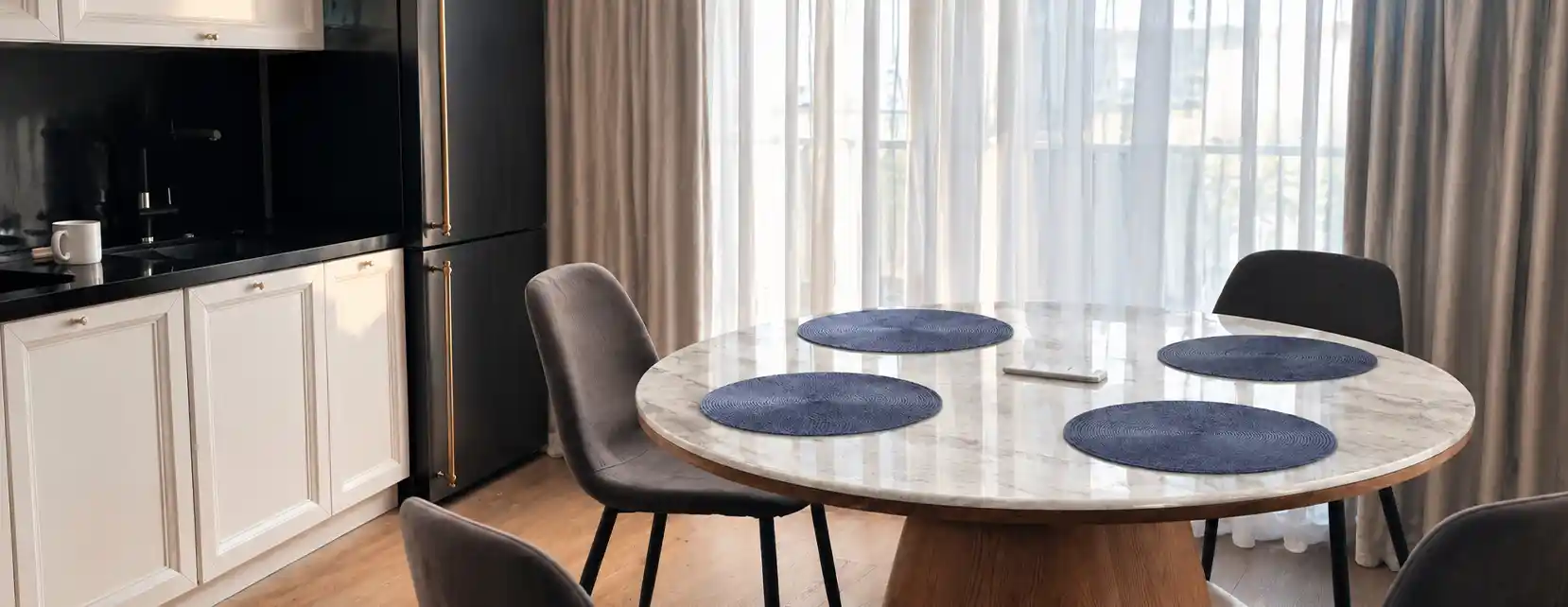

You picture candlelight, shared plates, and a marble dining table that makes even takeaway feel like an occasion. Then someone mentions spilled wine, heavy lifting, and mysterious rings beneath drinking glasses. Suddenly, that beautiful centerpiece feels like a commitment with small print. So, does marble deserve a place in your dining room, or will you spend dinner watching every passing sauce bowl? The answer depends on what you expect from furniture and how your household actually eats. Before you choose a table for its striking veins, understand the pleasures, compromises, and practical questions that separate lasting enjoyment from daily frustration.
Marble has visual depth that a flat color rarely delivers. Veins wander across the surface, softer patches interrupt darker lines, and each piece brings its own arrangement. That variation gives a dining room a focal point without demanding extra decoration.
A natural marble dining table can work beside woven chairs, simple timber furniture, or curved upholstered seating. The stone supplies detail, allowing the surrounding room to stay quiet.
Its appeal also comes from contrast. A substantial slab can look surprisingly light when paired with a slim base. A rounded edge can soften a room filled with straight lines.
Still, appearance alone cannot answer whether you should buy one. Think about breakfast crumbs, homework, crowded dinners, and the person who never uses a coaster. Your table has to belong in that picture too.
Two similar photographs can hide every different products. A solid marble dining table differs from a design with a thin marble layer over another material. A printed marble effect surface is another category altogether.
Ask the seller to describe the construction in writing. Request the stone thickness, overall weight, base material, and how the slab attaches to its support. An edge that looks thick may not represent the thickness across the whole surface.
None of these constructions should be judged from a photograph alone. What matters is whether the description matches the product and whether its structure suits your intended use.
Ask for photographs of the actual piece when available. Natural variation means the table arriving at your door may look different from the display image. Decide how much variation you welcome before placing an order.
A dark mark and a dull patch are not necessarily the same problem. Staining happens when a substance penetrates the stone. Etching happens when an acidic substance reacts with the surface, changing its finish.
That distinction matters because sealing can improve stain resistance, but it does not prevent acid etching. Lemon juice, vinegar, and wine deserve attention around marble. A sealed surface still needs sensible habits.
Blot spills promptly rather than spreading them. Use coasters beneath drinks and suitable mats beneath plates. Keep acidic cleaners and abrasive powders away from the stone.
Before buying, ask for cleaning instructions specific to the table's finish and any factory coating. Do not assume advice for an unmaintained slab applies to every finished product.
If these habits already fit your routine, marble may feel manageable. If they sound exhausting, listen to that reaction.
A polished finish reflects light and makes veining look crisp. It can give a small dining area a brighter visual rhythm, especially beside soft fabrics and muted walls.
A honed finish has a quieter, matte appearance. Some buyers prefer its softer look because it feels less formal. Neither finish removes the need to understand spills, marks, and cleaning.
When comparing a marble dining table for everyday use, look beyond staged photographs. Ask to see the surface under daylight and side lighting. Reflections can change how strongly small marks appear.
If samples are available, use them to judge color and texture alongside your flooring and chairs. Ask permission before testing anything on a sample. Choose the finish whose ordinary appearance you enjoy, rather than one that only wins you over under showroom lights.
Marble brings weight, and weight changes delivery day. A narrow staircase, small elevator, or tight hallway can turn an appealing purchase into an awkward logistical puzzle.
Measure the route from the building entrance to the dining area. Include door openings, corners, and any changes in level. Ask whether the table arrives assembled or in separate parts, and who handles assembly.
When comparing marble dining table delivery and assembly, request clear information about access requirements and additional charges. Find out what happens if the item cannot reach the room.
The base matters after delivery too. Check where its feet or pedestal sit relative to your chairs. A dramatic base loses its charm when everyone has to angle their knees around it. Ask the seller how the design supports the slab and what use restrictions tend to apply.
A table can fit inside a room and still make the room uncomfortable. Chairs need space to pull out. People need a route past seated diners. Nearby cabinets need room for their doors to open.
Mark the proposed dimensions on the floor, then place your chairs around that outline. Walk through the space as if dinner were already underway.
A round marble dining table can create an inviting setting for conversation, while a rectangular design may suit a longer room. Shape alone does not determine seating comfort, however. Base position and chair width matter just as much.
For a six seater marble dining table, ask for usable seating dimensions instead of accepting the label alone. Count the people you seat every day first, then consider how often extra guests actually visit.
Comparing marble dining table prices means comparing complete offers. One price may include delivery and assembly; another may cover only the furniture. The difference becomes clearer when you list everything together.
Ask about cleaning products, whether sealing is needed, and what determines the resealing schedule. Avoid assuming every marble surface follows the same timetable.
Surface restoration may be possible, but the result and cost depend on the damage, finish, and construction. Thin layers and factory coatings can change the available options. Ask about these limitations before purchase.
There is also the cost of moving. If you relocate frequently, a heavy table may add inconvenience each time. If you expect it to stay put, that issue may carry less weight in your decision.
Judge the total commitment against how much pleasure the table will bring to ordinary days.
Keep the mood of your home in mind as well. A busy household doesn’t need to become a showroom to accommodate one piece of furniture. Agree on simple habits with everyone who uses the table, and decide whether place-mats, coasters, and prompt cleanup feel realistic. A purchase works better when the whole household understands what living with it will involve.
An heirloom is more than something expensive that survives. It is something another person wants to keep. Marble can become part of a family's shared history, but that possibility depends on the whole table.
A sound base, suitable support, and a design that fits changing rooms all matter. So does your attitude toward visible age. Some owners enjoy a surface that records years of gatherings. Others find every new mark distracting.
Neither response is wrong. Problems begin when someone buys natural stone while expecting it to remain visually unchanged through unrestricted use.
Resale value is uncertain too. Condition, size, local demand, and transport costs affect what a future buyer might offer. Choose marble because you want to live with it, rather than because you expect a future sale to justify today's price.
Before you buy a marble dining table online, request clear dimensions, construction details, finish information, delivery terms, and the return policy as well. Ask how transit damage should be reported and whether natural variation affects returns.
Then picture an ordinary evening at home. If the table suits your space, your routines, and your tolerance for changing surfaces, marble can be a rewarding choice. If the upkeep would overshadow every meal, another material may suit you better.
Browse with measurements beside you, compare complete offers, and ask the awkward questions early. The right purchase should feel welcome long after the first photograph.
